
How to Search Marion County Court Records
The central tool is Indiana MyCase at public.courts.in.gov/mycase. Marion County runs on the state Odyssey case-management system, and MyCase pulls from Odyssey courts, which is most of Indiana. The Marion County courts page links straight to MyCase under "Search court cases." Search runs by case, by party, or by attorney. There is no charge to search and no login for the public view.
Have your details ready before you start. A full name is the minimum for a person search. A case number is the strongest input of all. You do not need hyphens or leading zeroes, and the search checks the whole number history, so an old or changed number can still find the file.
- Open Indiana MyCase and choose the Case, Party, or Attorney tab.
- For a known case, enter the Indiana case number; the full number works best.
- For a person, enter a last name plus a first name, middle name, or date of birth.
- Use a trailing asterisk for a starts-with search, such as "John*" or a case-number prefix.
- Narrow with the court, case type, status, and file-date filters.
- Open the case summary to read parties, charges, events, hearings, bonds, and documents.
- If a document has no link, request it from the Marion County Clerk; it may be public but not online.
Marion County is one of the Odyssey counties whose cases post to the public site. The system also limits any search to 1,000 results, so a tight name or date range matters in a county this size.
Marion County Court Records Search Fields
The MyCase search screen offers a set of fields that behave in specific ways. Case numbers ignore hyphens and zeroes. Names accept a trailing wildcard but cannot replace a whole first or last name. A sounds-like option helps with spelling but will not work on a name that already uses a wildcard. Date of birth narrows a person search yet never appears on the public record.
| Field Label | Type | Required | Notes / Format |
|---|---|---|---|
| Case Number | Text | One identifier only | Hyphens and leading zeroes optional; uniform format under Administrative Rule 8. |
| Citation Number | Text | Optional | Type it exactly as recorded in the case. |
| Last Name | Text | Yes for a person search | Trailing asterisk allowed as a starts-with wildcard. |
| First / Middle Name | Text | Unless DOB supplied | One of first, middle, or DOB must narrow the last name. |
| Date of Birth | Date | Optional | Narrows results; never shown on the public case detail. |
| Business Name | Text | Optional | Exact name preferred; wildcard catches suffix variations. |
| Court / Case Type | Dropdown | Optional | Limit to Marion courts; type options change with the court. |
| Status / File Date | Dropdown / Date | Optional | Open, closed, or a filed-on date range. |
Types of Marion County Court Records
Marion County court records run across many case types. Civil cases include contracts, collections, foreclosures, injunctions, and large mass tort litigation. Criminal cases split between major felony courts and misdemeanor or Level 6 felony courts under the local rules. Family cases cover divorce, custody, support, and paternity. Probate handles estates, wills, and guardianships. Traffic and ordinance matters appear as infractions.
Different rooms produce different records, but they all flow into the same public portal when the case is open to view. Small claims and eviction filings sit under Marion Superior Court small-claims rules.
- Civil records: parties, motions, orders, hearings, judgments, and financial entries.
- Criminal records: charges, statute, degree, bond, pleas, and sentence events.
- Family records: divorce and support filings, with certified decrees from the clerk.
- Probate records: estate administration, guardianships, and trusts.
- Traffic and small claims: citations, infractions, and limited civil money claims.
For deeper coverage, see Marion County court dockets, arrest records, and traffic court records.
What Marion County Court Records Show
A public case summary holds a lot of useful detail. Beyond the basics, it lists a chronological case summary of every dated event, plus charges, bonds, hearings, and document links where public. The site warns that any financial balance shown online may not be current or official.
| Field | What It Shows |
|---|---|
| Case Number | Uniform Indiana number encoding county, court, date, type, and sequence. |
| Court | Marion Circuit Court or a numbered Marion Superior Court room. |
| Case Type / Status | Civil, criminal, probate, family, or traffic; open, closed, or disposed. |
| Parties | Plaintiff, defendant, petitioner, or respondent; date of birth is hidden. |
| Charges / Bonds | Offense, statute, degree, citation, and bond amount in criminal files. |
| Events / Hearings | Filings, orders, continuances, dispositions, and scheduled hearing dates. |
| Documents | PDF links for some public filings; a missing link does not mean a record is secret. |
Public Access Framework for Marion County Court Records
Indiana court records are public under two layers of law. The Access to Public Records Act sets the baseline right to inspect and copy. The Indiana Rules on Access to Court Records then decide what posts online and what stays sealed. Online access can be narrower than counter access, and party or attorney logins can reveal more than the anonymous public view.
The Access to Public Records Act is the starting point. A read of Indiana Code § 5-14-3 shows the right to inspect public records and the path to challenge a denial through the Public Access Counselor.
That statute works alongside Supreme Court rules to define what a clerk may release for any Marion County court record.
Note: Anyone may search Marion County court records, but certified copies and official case status must come from the clerk or the court that holds the file.
Records That Are Sealed or Confidential in Marion County
Some records stay off public access by law. Juvenile delinquency files, adoption records, sealed cases, mental-health filings, and protected-party details are restricted. Protection-order cases do not appear in MyCase at all. Granted expungements can remove a case from public view.
Juvenile and adoption files have their own statutes. A look at Indiana Code § 31-39 covers juvenile record confidentiality, including the July 1, 2014 change for juvenile paternity cases.
Adoption files go further still. The adoption provisions in Indiana Code § 31-19 keep those records confidential unless a statute or court order opens them.
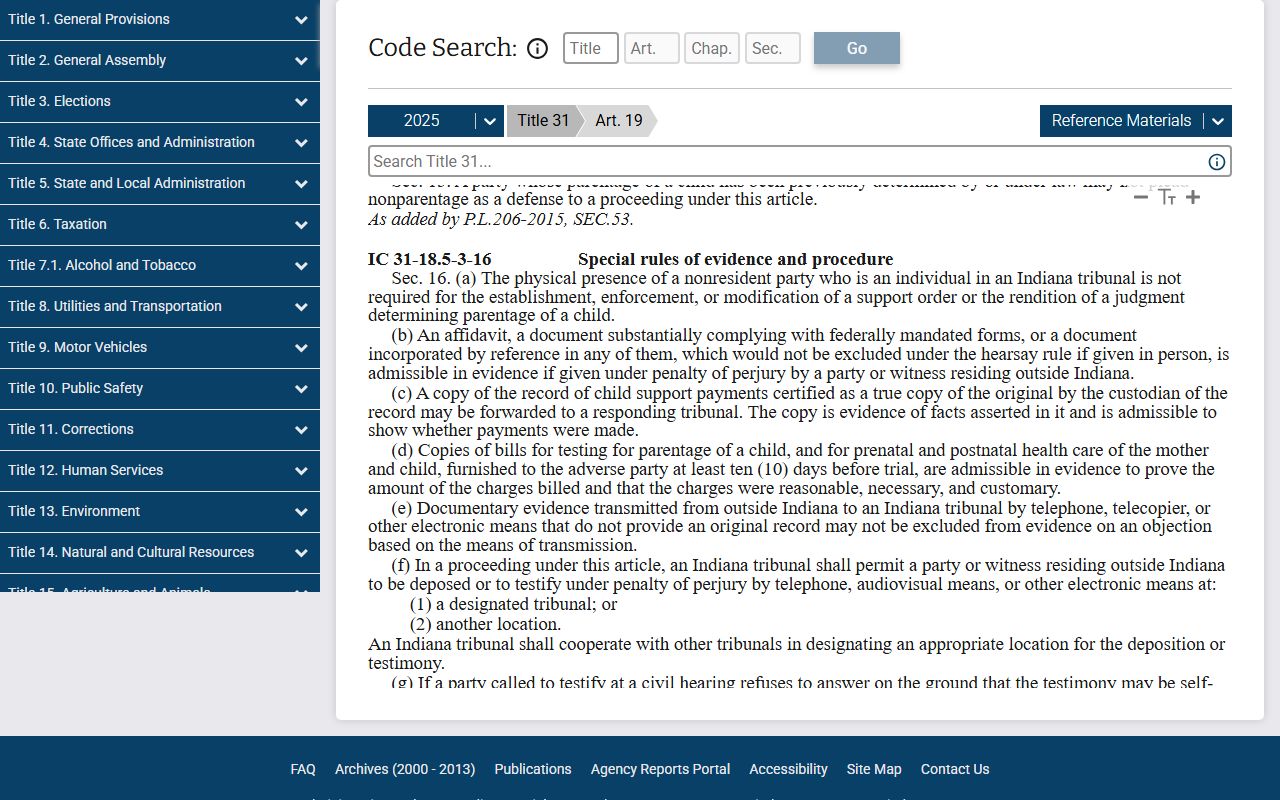
To view a sealed record, a person usually files a motion and waits for a judge's order. Expungement adds another layer. The expungement chapter at Indiana Code § 35-38-9 can seal eligible arrests, charges, and convictions after set waiting periods.
Because of these rules, "not found" in MyCase never proves a case did not exist, and a visible case is not proof of eligibility for sealing.
Common Terms in Marion County Court Records
Court files use words that can confuse a first-time searcher. A few quick definitions help you read a Marion County case the right way.
- Cause number
- The Indiana case number assigned to a case.
- Chronological case summary
- The dated event list that tracks activity over the life of a case.
- Disposition
- The outcome of a case, such as dismissed, guilty, or judgment entered.
- Bench warrant
- A warrant a judge issues, often after a missed court date.
- Redaction
- The masking of confidential data, such as a date of birth, on a public record.
In-Person Court Record Requests
When a document is not online, the Marion County Clerk holds the official file. Court proceedings and most court-record service center on the Community Justice Campus. Bring a valid photo ID and as much case detail as you can, such as the case number, party names, the document title, and the date.
Marion County Clerk
Community Justice Campus
675 Justice Way
Indianapolis, IN 46203
317-327-4010
Indiana also publishes a step-by-step on requesting records that are not posted online, including criminal, lien, will, and transcript requests. See the Clerk of Court page for fee and copy details.