
How to Look Up Marion County Jail Population Data
There is no single official Marion County dashboard that posts a daily population count for the public in the sources reviewed. Instead, the data sits across a few authoritative places. The Marion County Sheriff's Office runs the jail and is the primary source for capacity and daily counts. National datasets from the Bureau of Justice Statistics and research groups place the county in context. County budget documents also describe the jail and justice operations.
Read these sources for what each does well. The Marion County Sheriff's Office page is the agency that holds current jail figures. The Bureau of Justice Statistics publishes national jail data on a regular cycle. Because the figures update over time, treat any single number as a snapshot and check the date attached to it.
Marion County Jail Capacity Overview
County detention is concentrated at the justice campus on the southeast side of Indianapolis. The current rated bed capacity was not published in the official sources reviewed, so confirm it directly with the Sheriff's Office or a county capital or budget document rather than relying on an estimate. The table below shows where to verify capacity instead of a figure that may be out of date.
| Facility | Where to Confirm Capacity |
|---|---|
| Marion County Adult Detention, Community Justice Campus | Marion County Sheriff's Office |
| County justice operations | Indianapolis and Marion County adopted budget documents |
Local news in early 2026 described the jail as under capacity pressure tied to state and federal holds, but that reporting is not an official count, so it should not be quoted as a figure.
Average Daily Population
Average daily population, or ADP, is the mean number of people held across a period. It smooths out day-to-day swings and is the most useful single measure of jail size. The Sheriff's Office and budget documents are the right sources for a Marion County ADP figure, and the Bureau of Justice Statistics reports ADP nationally so a county number can be compared.
An official ADP for the county was not in the sources reviewed during research, so read the current figure from the Sheriff or a recent budget rather than an unofficial copy.
Demographic Breakdown
Jail population data is often broken down by sex, race, and age. These breakdowns help show who is held and how that compares to the county as a whole. The categories below are the standard ones, with the source that typically reports each for a county jail.
| Metric | Source That Reports It |
|---|---|
| Sex (male / female) | Sheriff's Office and BJS jail data |
| Race and ethnicity | BJS and research datasets |
| Age distribution | Sheriff's Office reporting |
A current Marion County demographic table was not located in official sources, so use the agency and national datasets above to build an up-to-date picture. Demographic figures are most meaningful when compared to the county's overall population, since that comparison is what shows whether any group is over- or under-represented in the jail.
Pretrial vs. Sentenced Population
County jails hold two broad groups: people awaiting trial and people serving a sentence. The pretrial share is a closely watched measure because it reflects bail and case-processing pressures. Most county jail population, nationally, is pretrial rather than sentenced.
| Status | What It Means |
|---|---|
| Pretrial | Held while a case is pending, often unable to post bond. |
| Sentenced | Serving a county sentence after a conviction. |
For the exact Marion County split, the Sheriff's Office and BJS jail reports are the authoritative sources.
Misdemeanor vs. Felony Population
Another way to read the population is by charge level. Some held people face misdemeanors, while others face felonies that can carry longer custody. Marion County routes major felony and misdemeanor or Level 6 felony cases to different criminal courts under its local rules, which shapes how long people stay. An exact misdemeanor-versus-felony split for the jail was not published in the sources reviewed, so confirm it with the Sheriff or county justice reporting.
Mental Health and Medical Population
A share of any jail population needs mental-health or medical care. Marion County runs a Mental Health Alternative Court that can move eligible defendants out of ordinary custody and into treatment-focused supervision. That program signals how the county handles part of this group. A specific count of the medical or mental-health caseload was not located in official sources, so the Sheriff's Office is the source for current figures.
National and State Context
County numbers mean more next to state and national rates. Jail population is often expressed per 100,000 residents so places of different sizes can be compared. Rather than quote a figure that changes, the table shows where each level's rate is published.
| Level | Where the Rate Is Reported |
|---|---|
| Marion County | Sheriff's Office and research datasets |
| Indiana | Prison Policy Initiative Indiana profile and BJS |
| National | Bureau of Justice Statistics |
The federal statistics agency is the broadest source for the national figure. A view of the Bureau of Justice Statistics jail data covers bookings, custody trends, and population reports across the country.
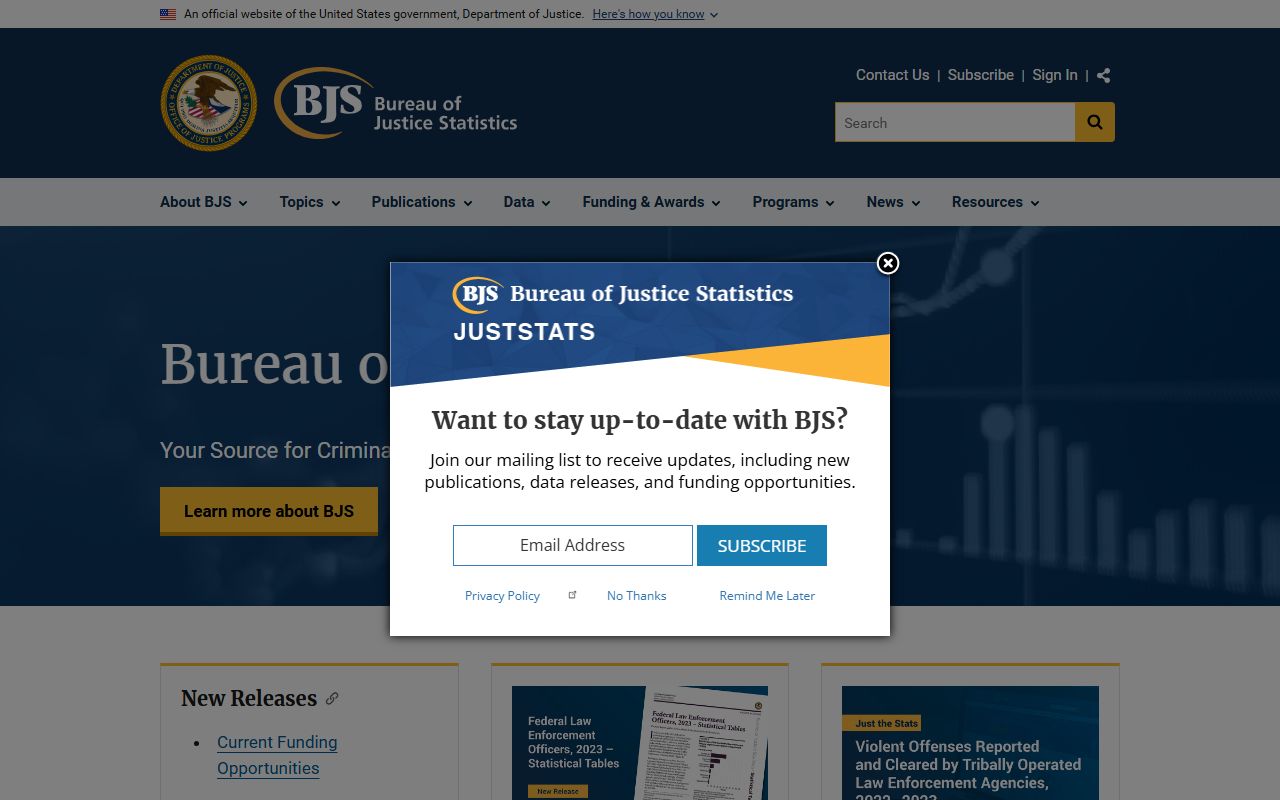
That data sets the national baseline a Marion County figure can be compared against.
State-level context comes from research groups that compile public data. A view of the Prison Policy Initiative Indiana profile sets the statewide picture and notes how Indiana lines up against national figures.
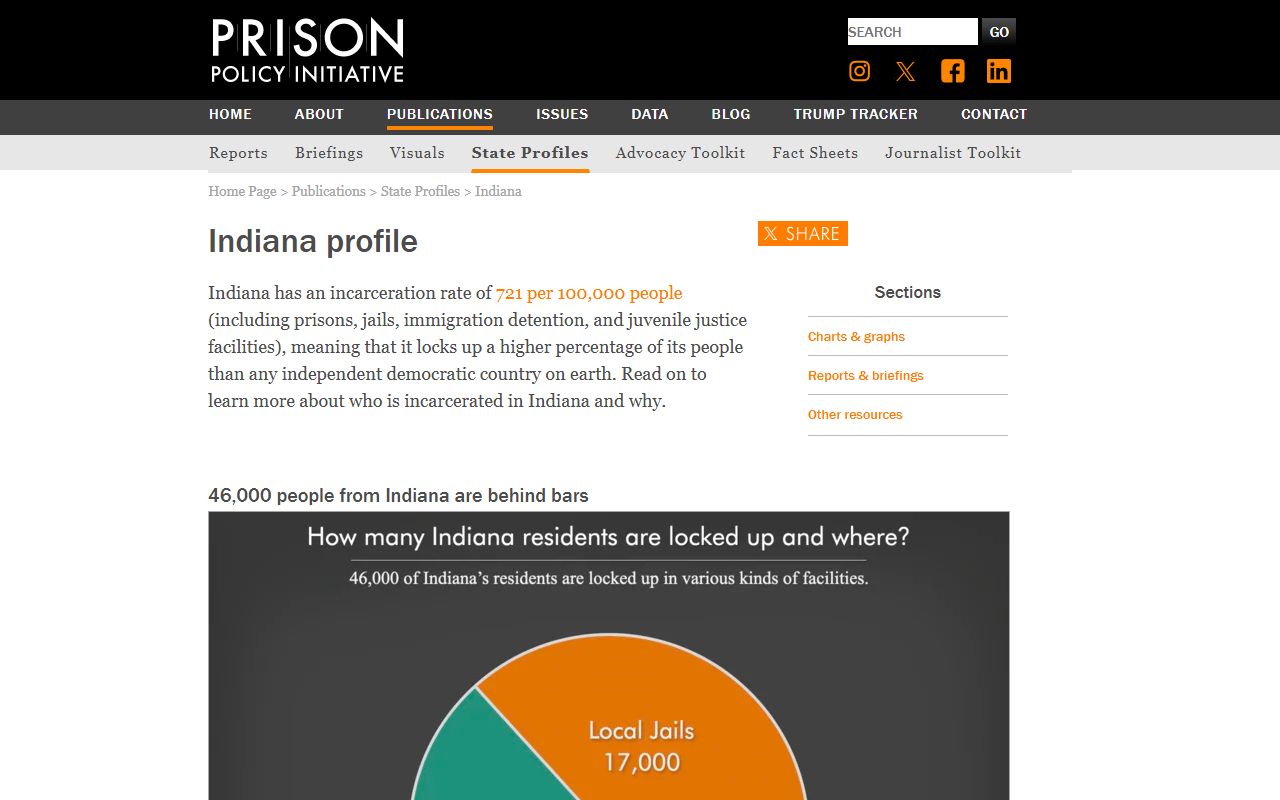
The Vera Institute publishes county-level incarceration trends for further comparison.
Population Trends Over Time
Trends matter as much as a single day's count. A multi-year view shows whether the jail is growing, shrinking, or holding steady, and it can flag pressures such as state or federal holds. County budget documents and Indiana trial-court statistics give a sense of caseload over time. The Indiana trial-court statistics show the case volume that feeds the jail, while the Sheriff and budgets show the custody side. Reading several years together is more telling than any single month, because a one-time spike can come from a court backlog or a policy change rather than a lasting trend.
Jail Population vs. Prison Population
People often mix up jail and prison numbers, but they count different groups. A county jail holds people awaiting trial and those serving short local sentences. A state prison holds people serving longer felony sentences. Marion County's population belongs to the jail side; state-sentenced people move to the Indiana Department of Correction.
| County Jail | State Prison | |
|---|---|---|
| Run by | Marion County Sheriff | Indiana DOC |
| Who is held | Pretrial and short sentences | Longer felony sentences |
| Population source | Sheriff and BJS jail data | IDOC and BJS prison data |
When you compare counts, make sure both come from the same kind of facility, or the numbers will not line up.
Why Marion County Jail Population Data Matters
Population data is more than a headcount. A high pretrial share can point to bail or case-processing pressure. A rising count can strain staffing and medical care. State and federal holds can push a jail toward capacity even when local arrests hold steady. Marion County news in early 2026 described exactly that kind of pressure, which is why officials and the public watch these figures.
Reading the data from the Sheriff and from national datasets, rather than a third-party site, keeps the picture accurate. Numbers change daily, so the date on a figure is as important as the figure itself.
Searching for Marion County Inmate Records by Name
This page covers aggregate jail population data, not individual lookups. To search for a specific person in custody by name, use the Marion County inmate records roster, which is the live tool for name-based custody checks.
Where the Data Comes From
Reliable jail population data comes from a short list of authoritative sources. The Marion County Sheriff's Office is the primary agency. National and research datasets add context and comparison. County budgets describe operations and funding. Cross-checking two of these sources is the best way to be sure a figure is current and correct.
- Marion County Sheriff's Office: the agency that runs the jail.
- Bureau of Justice Statistics: national jail and corrections data.
- Prison Policy Initiative: Indiana incarceration profile.
- 2024 adopted budget: county justice operations and funding.